 There are artists who defined the 1980s, and then there are artists who transcended it.
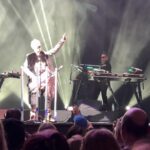
When Howard Jones walked onto the stage at the House of Blues Las Vegas, it wasn’t just another retro night on the Strip. It was a reminder that synth-pop — when written with sincerity and emotional intelligence — doesn’t age. It evolves.
Vegas crowds can be unpredictable. Tourists drift in. Casual fans test the waters. But this was a devoted audience. From the moment the lights dimmed, you could feel anticipation — not for a spectacle of pyrotechnics or laser overload, but for melodies that defined adolescence, first loves, and the wide-eyed optimism of the early MTV era.
And Howard Jones delivered.
A Strong Opening Pulse
The show opened with “Pearl in the Shell,” and immediately the House of Blues felt transformed. That shimmering synth intro — crisp and bright — cut through the room like it had been stored in perfect condition since 1984. The rhythm was tight, modernized just enough to feel current without sacrificing its DNA.
Jones, energetic and visibly grateful, moved across the stage with ease. He has always projected positivity rather than ego, and that tone set the mood for the entire night.
“New Song” followed, and the crowd reaction surged. That staccato keyboard riff still sounds futuristic in its simplicity. The lyric’s call for individuality — “Don’t crack up, bend your brain” — felt surprisingly relevant decades later. Jones delivered it with enthusiasm rather than nostalgia, as if the message still mattered deeply to him.
Joy in Motion
“Like to Get to Know You Well” was one of the night’s early highlights. The groove felt elastic and danceable, and the House of Blues floor became a sea of swaying bodies. What’s striking about Howard Jones live is how seamlessly his band blends vintage textures with modern clarity. The synths were lush but never muddy. The percussion pulsed without overpowering.
“The Prisoner” brought a slightly darker tone, showcasing Jones’ more introspective side. The arrangement leaned into atmospheric layers, allowing space between beats. It reminded everyone that behind the bright hooks, there’s always been philosophical depth in his songwriting.
Then came “The One to Love You,” a smooth, almost romantic moment that let the tempo breathe. Jones’ voice has matured gracefully. It’s slightly warmer now, less sharp than in the early ’80s, but arguably more expressive.
Deep Cuts and Surprises
“Assault and Battery” and “Eagle Will Fly Again” showcased Jones’ ability to weave spirituality and introspection into pop structures. “Eagle Will Fly Again,” in particular, had a meditative quality live. The arrangement swelled gradually, building toward a hopeful crescendo that felt earned rather than manufactured.
When the opening chords of “Everlasting Love” rang out — his energetic cover of the classic — the mood shifted into full celebration mode. The entire venue sang along. It was communal and loud, a joyful reset before diving back into deeper material.
“Look Mama” brought rhythmic drive back into focus. The bassline throbbed, and the synth stabs hit sharply. Jones’ stage presence here was infectious; he moved with the music rather than performing at the audience. It felt collaborative.
Nostalgia Meets Emotional Weight
“Life in One Day” delivered pure pop adrenaline. The tempo surged, and for a few minutes the room felt like a time capsule — MTV on constant rotation, Walkmans buzzing, and teenage optimism flooding back.
Then the emotional pivot arrived.
“No One Is to Blame” was breathtaking. Stripped down slightly in its opening, the song’s vulnerability came forward. Jones sang with restraint, letting the lyrics carry the weight. When the chorus arrived, the room responded instinctively, voices rising in unison. It’s the kind of song that sneaks up on you — what once felt like a breakup anthem now resonates as a meditation on human fragility.
“Hide and Seek” followed, and the atmosphere shifted into something almost spiritual. The sparse arrangement and lyrical depth held the audience in silence. Vegas, known for constant noise, rarely feels this still.
Modern Energy and Classic Hooks
“Bounce Right Back” injected fresh energy into the set. The newer material didn’t feel out of place; instead, it demonstrated how consistent Jones has remained in tone and message. Optimism, resilience, forward motion — these are themes he’s never abandoned.
“You Know I Love You, Don’t You?” brought back that punchy mid-’80s sparkle. The chorus was massive live, and the audience embraced it wholeheartedly.
Then came the defining moment: “What Is Love?”
The iconic synth riff drew immediate cheers. It’s one of those songs that transcends genre — instantly recognizable across generations. Jones delivered it with conviction, allowing the chorus to swell naturally. The crowd practically took over during the hook, and for a moment, it felt less like a concert and more like a shared emotional release.
The Encore That Had to Happen
After a brief exit, Jones returned for the encore with “Things Can Only Get Better.”
There was never any doubt this would close the night.
The opening notes sparked instant euphoria. The House of Blues became a chorus of optimism. In a world that often feels fractured and cynical, that refrain — “And things can only get better” — hit with renewed meaning.
Jones extended the final chorus, encouraging the audience to sing louder. And they did. Arms raised. Voices cracking. Smiles everywhere.
It wasn’t kitschy. It wasn’t ironic. It was sincere.
Full Setlist – Howard Jones
House of Blues – Las Vegas
Pearl in the Shell
New Song
Like to Get to Know You Well
The Prisoner
The One to Love You
Assault and Battery
Eagle Will Fly Again
Everlasting Love
Look Mama
Life in One Day
No One Is to Blame
Hide and Seek
Bounce Right Back
You Know I Love You, Don’t You?
What Is Love?
Encore:
Things Can Only Get Better
Final Thoughts
Howard Jones could easily lean into nostalgia and coast. Instead, he performs like someone who still believes deeply in the power of music to uplift.
The House of Blues was the perfect venue — intimate enough to capture nuance, large enough to allow the choruses to swell. The production was clean and focused. The lighting enhanced rather than overwhelmed. And the band played with precision and warmth.
Most impressive was Jones himself. His voice, though matured, carries authenticity. His energy feels genuine. And his message — optimism grounded in introspection — remains remarkably intact.
Las Vegas often sells fantasy.
Howard Jones offered hope instead.
In 2026, that feels revolutionary.