There’s something about a late-summer night in Massachusetts that feels tailor-made for a band like Korn. The air still carries the humidity of August, but the season’s edge is creeping in—a perfect metaphor for the tension, aggression, and release that Jonathan Davis and company have built a career out of. When Korn rolled into the Xfinity Center in Mansfield on a crisp September night, the crowd wasn’t there for nostalgia alone. They came to be reminded why Korn remain one of the most visceral, cathartic live acts in heavy music. And over the course of nearly two hours, the band delivered just that—a pulverizing, emotionally raw, and surprisingly dynamic performance that proved why, nearly three decades into their career, they’re still kings of the nu-metal mountain.
A Dark Carnival of Sound
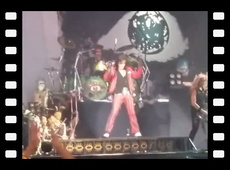
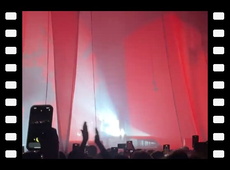
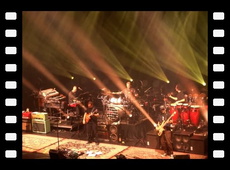
As the stage lights dimmed and the crowd’s low roar turned into a deafening wave, a huge digital curtain dropped to reveal the band—bathed in red strobes and smoke, silhouettes against a wall of sound. The opening riff of “Here to Stay” hit like a hammer. Fieldy’s bass thumped so hard you could feel it in your sternum, Brian “Head” Welch and James “Munky” Shaffer’s guitars intertwined in that unmistakable Korn churn, and Jonathan Davis stalked the stage like a man possessed. It’s a song that encapsulates everything that makes Korn work: the groove, the rage, the sense of survival. From that first breakdown, the audience was in the palm of Davis’s hand.
Without missing a beat, they tore into “Dead Bodies Everywhere,” one of Follow the Leader’s most sinister cuts. The eerie samples and dissonant guitars swirled around Davis’s guttural growls, and by the first chorus, the entire pit was a mass of swinging arms and swirling dust. There’s always been something unsettlingly theatrical about Korn’s live presentation—equal parts confessional and horror show—and in Mansfield, it was in full bloom.
The transition into “Got the Life” sent the place into chaos. That funky, syncopated groove remains one of the best examples of Korn’s strange alchemy: metal that you can dance to. Davis grinned for the first time all night as thousands of fans screamed every word back at him. The energy was electric—half mosh pit, half communal release.
Deep Cuts and Defiance
Korn’s willingness to dig deep into their catalog is one of the things that makes their current tours so special. After years of focusing on the hits, they’ve started weaving in old-school material that hardcore fans never thought they’d hear again. “A.D.I.D.A.S.” brought that twisted sense of humor the band used to wield in their early days—a reminder that Korn’s darkness has always been self-aware. Davis donned his classic kilt and crooned the “All Day I Dream About Sex” refrain with mock seduction, while the crowd shouted back the letters like a mantra.
Then came “Hey Daddy,” a rare gem from Issues that hasn’t seen the stage often in the 21st century. It’s one of those tracks that shows Davis at his most emotionally exposed, blending a soft-spoken vulnerability with primal rage. The way his voice cracked on the bridge—equal parts scream and sob—brought chills. The band followed it with “Good God,” and suddenly, the entire venue was shaking. Few songs in Korn’s arsenal are as relentless, and Davis’s rhythmic, almost percussive delivery turned the pit into a war zone.
The night wasn’t all about reliving the past, though. When they launched into “Start the Healing,” one of the standout tracks from Requiem, the newer material held its own. The song’s soaring chorus felt cathartic rather than nihilistic, showing how Korn’s sound has evolved without losing its soul. It’s the modern Korn—still heavy, still weird, but a little more at peace with itself.
Back to the Beginning
Every great Korn show eventually circles back to where it all began, and Mansfield was no different. The opening bass slap of “Blind” sent a ripple through the audience, the same way it did when the song helped ignite a movement in 1994. Davis screamed, “Are you ready?!” and the place erupted. That riff still sounds like the beginning of a revolution.
From there, they segued into “Ball Tongue,” another early cut that doesn’t get nearly enough live play. Davis’s scat-style vocals and unpredictable phrasing gave it a wild, almost freestyle energy, while Munky’s guitar squealed like metal on metal. “Clown” came next, another track from their debut that hit with unfiltered aggression. It’s amazing how raw these songs still sound live—like they were recorded last week in some grimy California rehearsal space.
Then came one of the most theatrical moments of the night: “Shoots and Ladders.” Davis emerged with his signature bagpipes, a spotlight cutting through the smoke as he began the haunting intro. The nursery rhymes, twisted into a minor-key dirge, echoed through the stadium. As the song reached its climax, the band seamlessly transitioned into the outro of Metallica’s “One.” It was a brilliant touch—melding two generations of metal darkness into one cathartic explosion.
The intensity didn’t let up with “Twist,” a fan favorite from Life Is Peachy that has always been more performance art than song. Davis growled, snarled, and unleashed guttural gibberish while the band thrashed behind him. It was raw, chaotic, and exhilarating—a reminder that Korn are still one of the most original live bands on the planet.
The Middle Years Resurface
As the set progressed, Korn touched on the turn-of-the-millennium era that helped them dominate rock radio. “Make Me Bad” brought a moody, atmospheric energy, with the lights shifting to deep blues and purples. The crowd swayed instead of moshed for this one, singing the chorus with almost tender precision. It was one of those moments where you could see how much Korn’s audience has grown up with them—teenagers in 1999 now standing with spouses, kids, and decades of memories attached to every lyric.
“Insane” from The Serenity of Suffering hit like a storm—one of their heaviest and most underrated modern tracks. It was followed by “Y’All Want a Single,” the night’s most defiant moment. Davis barked, “Say ‘F*** that!’” and the audience gleefully obliged, a middle finger to the industry that once tried to pigeonhole them. It’s always been Korn’s anthem of resistance, and in Mansfield, it sounded as powerful as ever.
Encore: The Emotional Core
After a brief break, the stage lights dimmed again, and a soft ambient hum filled the air. Davis returned alone, clutching a mic stand shaped like H.R. Giger’s alien sculpture—a piece of rock history in itself. The crowd erupted as he began the haunting intro to “Falling Away From Me.” The rest of the band joined in, and for a moment, the energy shifted from anger to catharsis. Davis’s voice was rich with emotion as he screamed the final chorus, the words echoing over the crowd like a mantra.
Next came “Oildale (Leave Me Alone),” a surprising inclusion from 2010’s Korn III: Remember Who You Are. It’s a track that often gets overlooked but fits perfectly into the live setting with its grinding groove and fierce delivery. Davis dedicated it to “anyone who’s ever been written off,” and the sentiment hit home.
They closed the night with “Freak on a Leash,” and it was everything a Korn fan could hope for. The song’s elastic bass line, eerie guitars, and that unforgettable scatted bridge have lost none of their power. Davis’s “boop-da-boop” breakdown still whips the crowd into a frenzy—an inside language between the band and its fans that feels as potent now as it did in the late ‘90s. The final chorus turned into a full-venue singalong, with Davis stepping back from the mic and letting the audience carry the melody. It was a perfect ending—rage transformed into unity.
A Band That’s Still Healing
Korn’s 2024 tour has felt like a victory lap of sorts, but not one of complacency. This isn’t a band coasting on nostalgia or stuck in the past. If anything, their live show proves how relevant they still are. The production was massive without being overdone—just the right mix of visuals, lighting, and raw performance. Davis remains a mesmerizing frontman, equal parts shaman and survivor, channeling pain into something transcendent.
Fieldy’s return to the stage after some time away added an extra layer of energy to the rhythm section. His percussive bass tone is still one of the most distinctive sounds in rock, and the chemistry between him, Head, and Munky was palpable. Ray Luzier, meanwhile, remains a powerhouse behind the kit, somehow combining precision and chaos in perfect measure.
But beyond the technical prowess, what stood out most in Mansfield was the emotional core of the show. Korn’s music has always been about exorcising demons—personal, societal, internal—and hearing songs like “Falling Away From Me” and “Good God” in 2024 feels less like teenage angst and more like generational therapy. These are the same fans who screamed along to “Blind” in high school and now bring their own kids to share the experience. Korn’s message of pain, survival, and release still resonates, maybe even more deeply now.
Legacy in Real Time
Watching Korn play in 2024 feels like watching a band fully aware of their legacy but uninterested in living in it. They’re still experimenting, still pushing boundaries, still evolving their sound. The inclusion of newer tracks like “Start the Healing” alongside foundational anthems shows that they’re not just curators of their past—they’re still active participants in their own mythos.
The Xfinity Center crowd reflected that. You saw kids with fresh piercings standing next to fans who were probably at Woodstock ’99. You saw Korn shirts from every era, from Life Is Peachy to Requiem. It wasn’t just a concert—it was a gathering of a tribe that’s existed on the margins for 30 years, bonded by one band’s relentless honesty.
As the lights came up and fans filed out into the cool September air, you could still feel the bass in your chest. Korn had done what they’ve always done best—create a space for catharsis, chaos, and connection. In a time when rock’s mainstream footprint is smaller than ever, their ability to fill arenas and amphitheaters with that kind of communal energy is nothing short of remarkable.
Korn may have started as outcasts, but in 2024, they’ve become something much larger: a living testament to endurance. Their sound still hits like a gut punch, their message still matters, and their live show still feels like both a riot and a revival.
Grade: C+