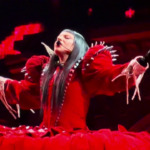
 Some concerts feel like events. Others feel like destinations. Lady Gaga’s Mayhem Ball in Osaka somehow managed to be both — a night that didn’t just happen in Japan, but one that felt inseparable from the place itself. Long before the lights dropped and the first note rang out, the experience had already begun. That’s the thing about traveling for a show: the concert isn’t confined to the venue. It leaks outward into the streets, the food, the walking, the quiet moments between excitement. By the time Gaga took the stage, the day had already shaped how the night would feel.
Osaka set the tone immediately. This is a city that doesn’t posture. It doesn’t pretend to be precious or overly polished. It hums with confidence, humor, and appetite. Where Tokyo can feel futuristic and Kyoto reverent, Osaka feels alive in the present tense — noisy, flavorful, human. That energy mirrors Gaga at this stage of her career: fearless, self-aware, unapologetically maximalist, but grounded by experience. The Mayhem Ball is about chaos, yes, but it’s also about control, survival, and transformation. Osaka, in its own way, understands that balance.
Wandering Osaka Before the Storm
We started the day early, stepping out into streets already awake and moving. Morning in Osaka carries a different rhythm — quieter but purposeful. Locals heading to work, shop owners preparing their storefronts, the smell of food beginning to creep into the air even before hunger fully sets in. There’s a comfort in walking without a strict agenda, letting the city guide you.
Dotonbori, of course, was unavoidable. It’s chaos done beautifully: neon signs stacked like collage art, cartoonish mascots frozen mid-pose, the canal reflecting it all like a warped mirror. The famous Glico runner loomed overhead, timeless and slightly absurd. Tourists snapped photos nonstop, but locals flowed through effortlessly, as if immune to the spectacle. We grabbed takoyaki from a street stall, standing shoulder to shoulder with strangers, steam rising into the cool air. It tasted exactly how it should — crisp on the outside, molten inside, comforting in its simplicity.
From there, the city softened. We wandered away from the main drag into narrower streets, where shrines appeared almost by accident, tucked between apartment buildings and vending machines. A few moments of stillness. Incense smoke curling upward. Coins clinking into offering boxes. It was grounding — the kind of pause that lets anticipation build quietly rather than explosively.
Lunch was a small, unassuming place with plastic menus and laminated photos. No English. No explanation. Just trust. Bowls arrived perfectly balanced, rich but clean, the kind of meal that resets your senses. By mid-afternoon, the city began to subtly change. Black leather. Platform boots. Dramatic makeup being applied in convenience store mirrors. Gaga fans don’t just attend concerts — they inhabit them.
Osaka was ready. So were we.
Entering the House of Mayhem
The venue buzzed with an energy that felt distinctly Japanese yet unmistakably Gaga. There was excitement, but also focus. Organization without stiffness. Creativity without chaos. Fans queued patiently, many in elaborate outfits that would have looked extreme anywhere else but somehow felt perfectly at home here.
When the lights dropped, the roar was immediate — not sloppy, not scattered, but unified. Then came the Manifesto of Mayhem, and suddenly the night snapped into place.
ACT I: Of Velvet and Vice
The opening moments are confrontational by design. Manifesto of Mayhem isn’t a warm-up — it’s a declaration. The stage resembles a twisted cathedral, all sharp lines and looming structures, suggesting both worship and threat. Gaga doesn’t simply appear; she claims the space.
Bloody Mary unfurls like a dark ritual, Gaga moving with controlled precision, every gesture deliberate. Abracadabra and Judas escalate the tension, their choreography aggressive and angular, less about dance-floor joy and more about power. This is Gaga as high priestess of her own mythology.
AURA pushes further into abstraction, while Schieße leans into industrial menace, the sound pounding against the crowd’s chest. Garden of Eden offers temptation rather than relief — lush but dangerous, beauty with teeth. When Poker Face finally arrives, it’s electric. The crowd erupts, not because the song is familiar, but because it’s still effective. Gaga knows exactly when to give and when to withhold.
The Abracadabra Remix closes the act in a swirl of disorientation, as if reality itself has started to blur.
ACT II: And She Fell Into a Gothic Nightmare
This act is colder, darker, and emotionally sharper. Perfect Celebrity feels like a thesis statement — Gaga dissecting fame with surgical calm. Disease slithers forward, unsettling rather than explosive.
Paparazzi is transformed from pop anthem into eerie confession. The Osaka crowd grows quiet during the verses, listening intently, then surges during the chorus, the contrast stunning. LoveGame and Alejandro bring sensuality, but it’s distant, stylized, almost clinical.
The Beast ends the act with brute force. Gaga dominates the stage, less human than mythic, commanding without compromise.
ACT III: The Nightmare That Knows Her Name
This is the emotional core of Mayhem Ball. The interlude feels like crossing a threshold. From here on, logic gives way to dream.
Killah, Zombieboy, Dead Dance, and LoveDrug form a relentless sequence — heavy, unsettling, intentionally exhausting. Gaga isn’t entertaining so much as immersing. It’s performance art masquerading as pop, and she commits fully.
When Applause hits, the release is almost overwhelming. Joy floods the room. Just Dance follows, and suddenly the arena feels weightless. The crowd sings every word, arms raised, smiles wide. The darkness was necessary to make this moment hit harder.
ACT IV: Every Chessboard Has Two Queens
This act feels reflective, even tender. Shadow of a Man and Kill for Love explore vulnerability beneath the spectacle. Summerboy brings warmth and nostalgia, a reminder of Gaga’s early days without feeling regressive.
Born This Way lands powerfully in Osaka, where the song’s message of self-acceptance resonates in a culture that often prizes conformity. Million Reasons and Shallow strip the show back to voice and emotion. Gaga doesn’t oversell these moments — she trusts them.
Edge of Glory lifts the room again, while Brown Eyes and Vanish Into You feel deeply personal, almost confessional. Sandstorm closes the act with explosive energy, leaving nothing unspent.
FINALE: Eternal Aria of the Monster Heart
Bad Romance detonates the arena — timeless, unavoidable, massive. How Bad Do You Want Me adds defiant swagger, and The Fame closes the night not as a victory lap, but as reflection. The journey, not the crown.
Setlist
Manifesto Of Mayhem
ACT I: Of Velvet And Vice
Bloody Mary
Abracadabra
Judas
Aura
Schieße
Garden Of Eden
Poker Face
Abracadabra (Remix)
ACT II: And She Fell Into A Gothic Nightmare
Perfect Celebrity
Disease
Paparazzi
LoveGame
Alejandro
The Beast
ACT III
The Nightmare That Knows Her Name
Killah
Zombieboy
Dead Dance
LoveDrug
Applause
Just Dance
Wake Her Up (Interlude)
ACT IV: Every Chessboard Has Two Queens
Shadow Of A Man
Kill For Love
Summerboy
Born This Way
Million Reasons
Shallow
Die With A Smile
Edge Of Glory
Brown Eyes
Vanish Into You
Sandstorm (Encore)
FINALE: Eternal Aria Of The Monster Heart
Bad Romance
How Bad Do You Want Me
The Fame
Final Thoughts
The Mayhem Ball in Osaka wasn’t just a concert — it was a statement of artistic intent. Gaga didn’t rely on nostalgia or crowd-pleasing shortcuts. She trusted her audience to follow her into darkness, abstraction, and emotional vulnerability. Osaka rewarded that trust with attention, respect, and explosive release when it mattered most.
Seen through the lens of a day spent wandering the city — eating, observing, absorbing — the show felt inseparable from its setting. Gaga didn’t just perform in Osaka. She performed with it.
And the city listened.