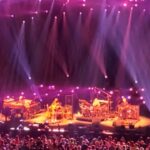
 From the moment the lights dimmed at Seattle’s Climate Pledge Arena, there was a tangible buzz in the air, a sense of expectancy that only Phish can cultivate. Fans of all ages—some in Phish tees that had clearly survived decades, others brand-new converts drawn in by the band’s legendary live reputation—filled the arena with a collective hum of anticipation. By the time the first notes of “Sand” rang out, the energy hit a fever pitch, and it was clear that this show was going to be one of those nights remembered long after the last encore.
The first set opened with “Sand,” a choice that immediately set the tone: precise, melodic, and brimming with exploratory potential. Trey Anastasio’s guitar work danced effortlessly over the rhythm section, teasing intricate licks that teased the band’s improvisational wings. Mike Gordon and Jon Fishman locked in a groove that was simultaneously solid and elastic, giving the opening a buoyant, slightly playful feel. From there, the momentum didn’t falter—“Kill Devil Falls” followed with a driving, rhythmic punch that had the crowd bouncing in unison. It was a song that demanded movement, and the arena responded.
“Theme From the Bottom” into “Back on the Train” demonstrated the band’s ability to weave narratives within a set. The transition flowed smoothly, a bridge between introspective lyrics and full-bodied jams. The audience, fully aware of the potential for these mid-set moments to blossom into extended improvisation, leaned in collectively, as if holding their breath for what might come next. The payoff was subtle but undeniable: intricate interplay and teasing melodic motifs that hinted at the journey yet to unfold.
“If I Could” slowed things down, a soulful pause that allowed for reflection amid the high-energy start. Trey’s vocal delivery, heartfelt and precise, resonated across the arena, while Page McConnell’s keyboard textures added emotional depth, painting a sonic backdrop that was both lush and intimate. The energy was gently recalibrated for “Tube,” whose funky grooves reinvigorated the crowd with a catchy, playful bounce. Fans couldn’t help but move, and the dance-filled aisles testified to Phish’s mastery of pacing—how they can take the audience from introspective peaks to kinetic valleys seamlessly.
Set one’s midpoint saw Mike Gordon stepping forward with “Mull,” giving the bassist his moment in the spotlight. Gordon’s understated but complex composition allowed the band to explore a different flavor—one rooted in groove, space, and melodic experimentation. It was a welcome change of pace and a reminder that Phish is as much about the individual voices of its members as it is about the collective sound. The first set concluded with “Wolfman’s Brother,” a raucous, fan-favorite number that left the crowd cheering and fully primed for what would come in the second set.
Set two opened with “Blaze On,” signaling a dive into deeper improvisational waters. The song built slowly, with Trey teasing themes that were gradually picked up by Page and the rhythm section. What followed was a masterclass in the band’s signature storytelling through music: “Golden Age,” a TV on the Radio cover, morphed seamlessly into a “Split Open and Melt” jam, merging the cover’s melodic structure with Phish’s unique, exploratory ethos. The crowd, already warmed up by the first set, erupted with excitement, fully embracing the sprawling, unpredictable journey the band was leading them on.
The surprises continued with “What’s Going Through Your Mind,” a Trey Anastasio Band cover that added a fresh layer to the set. It was a nod to the broader musical universe Trey inhabits outside of Phish, yet it felt fully at home in this context. The interplay between Trey’s guitar and Page’s keyboards, along with Mike and Fishman’s rhythmic foundation, transformed the song into something expansive, allowing for spontaneous detours and delicate improvisational moments that kept the audience on the edge of their seats.
“I Always Wanted It This Way” served as a connective tissue to the next major jam, flowing effortlessly into a spirited rendition of “Ghost.” “Ghost” showcased the band’s ability to stretch a song into a narrative, ebbing and flowing with dynamic peaks and valleys. The jam was energetic yet nuanced, demonstrating a perfect balance between structure and improvisational freedom. By this point, the audience was fully entranced, swept along by the ebb and flow of the set, the room vibrating with collective anticipation for each next turn.
The encore was a two-song explosion of both nostalgia and technical brilliance. “Bug” opened the encore with its signature syncopated rhythms and clever shifts, teasing the audience with a playful energy that culminated in a short but sweet segue into “Possum.” The latter, a fan-favorite, allowed Phish to close the night with exuberance and flair, giving fans a final, exhilarating jolt before the lights came back on. There was a sense of catharsis in the arena—a communal exhale of pure joy, the feeling that everyone present had witnessed something truly special.
What stood out throughout the night was Phish’s uncanny ability to balance spontaneity with precision. Every transition, every jam, every quiet moment felt deliberate, yet there was always a sense that anything could happen. It’s a quality that has defined the band for decades and keeps fans coming back time and time again. Trey’s guitar work was both inventive and emotive, Page’s keyboards added rich, immersive textures, Mike’s bass was a steady but playful anchor, and Fishman’s drumming—always propulsive, always responsive—kept the entire operation in perfect motion.
The setlist itself told a story. Opening with a balance of melodic explorations and fan favorites, shifting through intimate moments, bass-driven compositions, and powerful jams, Phish demonstrated a keen understanding of pacing and narrative flow. The second set, in particular, was a highlight, blending covers, improvisation, and fan-favorite originals in a way that felt both adventurous and rooted in the band’s signature identity. There were moments of controlled chaos, stretches of meditative calm, and explosive peaks that sent waves through the crowd, all executed with a skill that only comes from decades of performing together.
For fans, there was the joy of hearing longtime favorites like “Wolfman’s Brother” and “Ghost” executed with precision and energy, while newer interpretations of covers added unexpected twists. The evening was a perfect illustration of why Phish shows are more than just concerts—they are shared experiences, communal journeys where the music acts as both guide and companion. Every attendee, whether longtime fan or first-timer, left feeling part of something larger, connected through a shared appreciation for unpredictability, musicianship, and sheer joy.
Visually, the show was understated but effective. Lighting shifted to match the ebb and flow of the music, accentuating jam crescendos, highlighting solos, and bathing the arena in colors that mirrored the mood of each song. It wasn’t a distraction, nor did it attempt to overshadow the music. Instead, it complemented the performance, emphasizing Phish’s belief that the focus should always remain on the musical journey.
By the time the final notes of “Possum” faded, applause and cheers filled every corner of Climate Pledge Arena. People lingered, reluctant to leave, still riding the waves of energy the band had generated. Conversations buzzed with excitement and reflection: favorite jams, unexpected segues, and moments that had sent chills down spines. The evening was a reminder of Phish’s enduring power—not just to play music, but to create moments of collective exhilaration, moments that live on in memory long after the lights come up.
Phish at Climate Pledge Arena on April 18th, 2025, was more than a concert. It was a masterclass in pacing, improvisation, and connection, a demonstration of why the band has maintained such a devoted following for decades. With a perfectly balanced setlist, remarkable improvisational interplay, and moments that ranged from intimate to explosive, the night was a testament to the band’s ongoing evolution while honoring the legacy that has made them iconic. Fans left energized, awed, and reminded that Phish’s live shows remain a singular, almost magical experience. It was one of those nights that epitomized what makes seeing Phish live not just a concert, but a full-bodied adventure in sound, spontaneity, and community.
Setlist:
Set 1:
Sand
Kill Devil Falls
Theme From the Bottom ->
Back on the Train
If I Could
Tube
Mull (Mike Gordon song)
Wolfman’s Brother
Set 2:
Blaze On ->
Golden Age (TV on the Radio cover) -> Split Open and Melt jam
What’s Going Through Your Mind (Trey Anastasio Band cover)
I Always Wanted It This Way ->
Ghost
Encore:
Bug ->
Possum
This show reaffirmed why Phish continues to captivate audiences, offering a unique blend of technical mastery, adventurous improvisation, and pure, unadulterated fun. Every note felt intentional, every jam felt like a story unfolding in real time, and every fan left knowing they had been part of something truly special.